Lesson 05
Lesson 05
The End of Negotiation
Why seeing your patterns doesn't stop them, and what finally does
Practice This Week
This week, notice the exact moment you insert a condition — 'I'll stay with this if it stays manageable' — and let the condition drop. Not through force. Simply stop honoring the exit clause. See what remains when the negotiation has nowhere to go.
Discussion
The live discussion room from this lesson. Watch it as another transmission — feel into the others as they ask questions and speak, and stay open to direct relating.

Discussion 5 - Room 1
Led by Laurenz
The complete Lesson 5 discussion room, unedited, led by Laurenz. Practitioners working the teaching in real time — questions, resistance, and live guidance.
Discussion 5 - Room 2
Led by Albert
The complete Lesson 5 discussion room, unedited, led by Albert. Practitioners working the teaching in real time — questions, resistance, and live guidance.
Discussion 5 - Room 3
Led by Shreyash
The complete Lesson 5 discussion room, unedited, led by Shreyash. Practitioners working the teaching in real time — questions, resistance, and live guidance.
Reading Material
Introduction
At this point in the arc, nothing new needs to be introduced. The ground has already been established. You have seen that attention is not stable — that something is always pulling, organizing, and shaping your experience. You have seen that this movement is not random, but patterned. You have seen that these patterns are not occasional disruptions, but structural — they generate the continuity of your life. And you have seen that even your ability to observe those patterns is limited, conditioned, and incomplete.
The Limits of Seeing
Given all of that, a quiet assumption begins to form: that if you can see clearly enough, something will change. Day 5 dismantles that assumption — not by adding complexity, but by removing what remains unexamined.
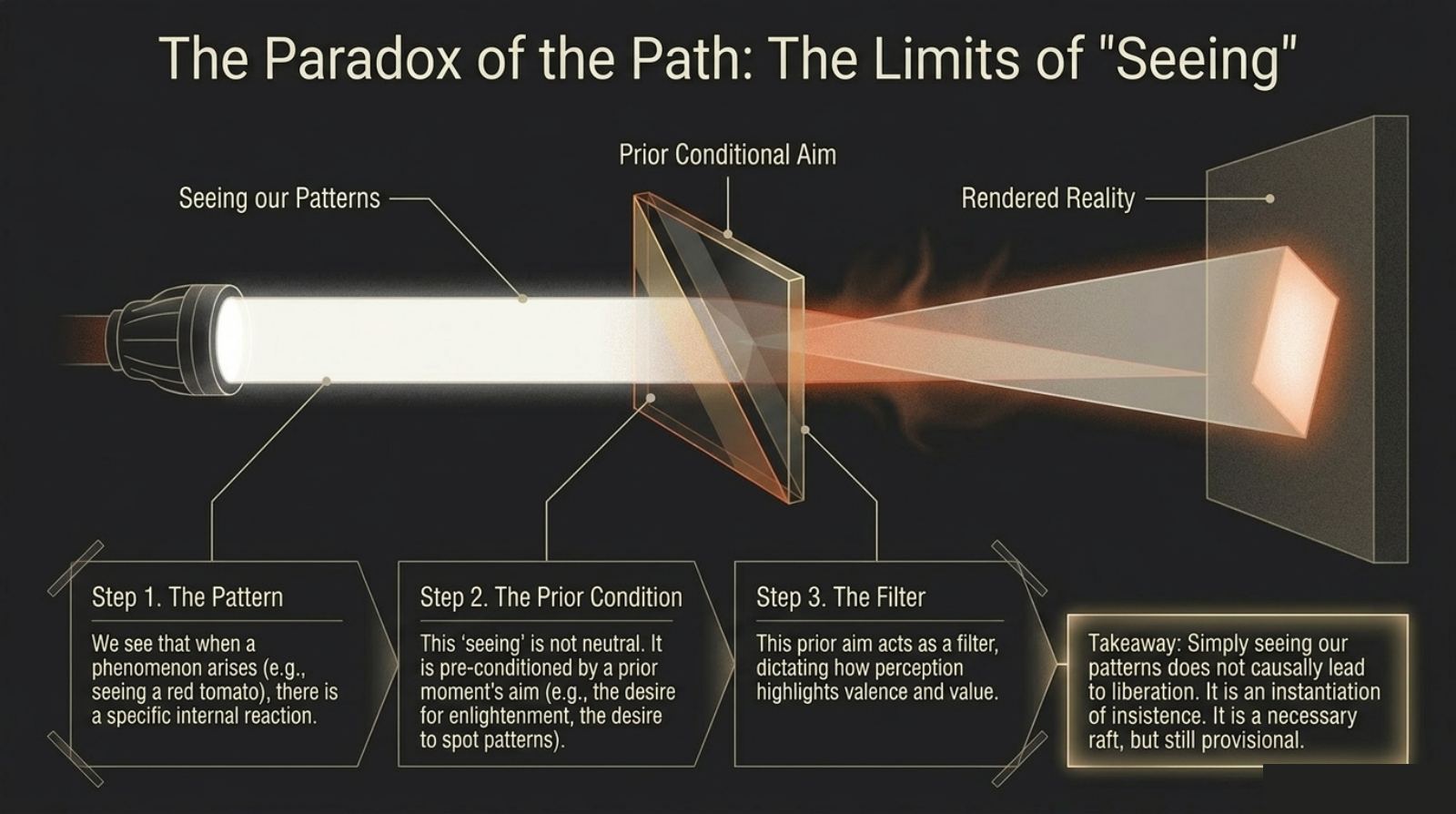
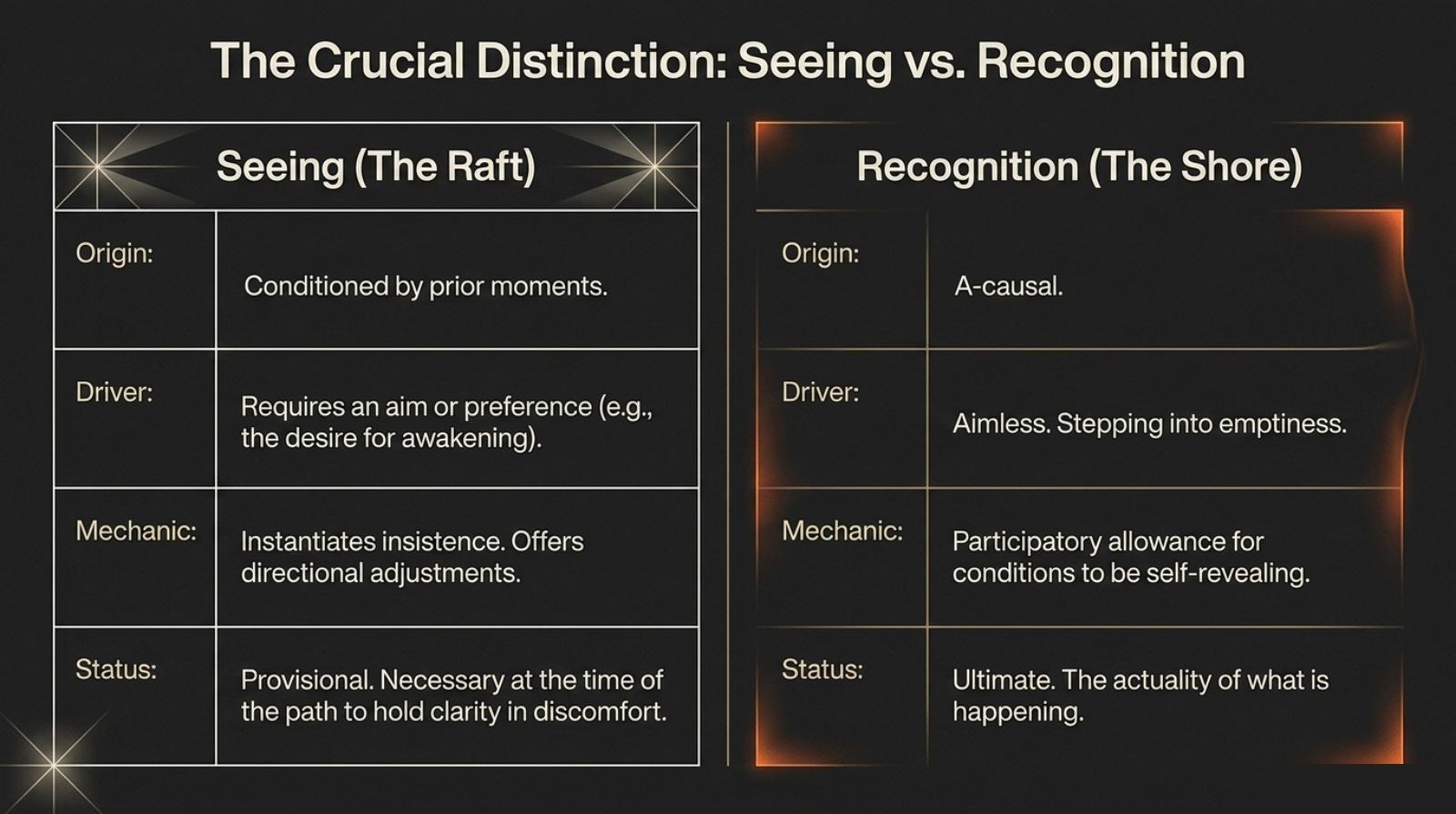
The issue is not that you have not seen enough. The issue is that seeing does not do what you think it does. Seeing does not stand outside the structure you are observing. It is part of it. The very act of recognizing a pattern is already shaped by prior conditioning. It arises from a particular aim, a preference, a movement toward understanding or resolution. That aim filters what becomes visible, assigns value to what is seen, and organizes the experience into something coherent.
 Tap to enlarge
In this way, even your clarity carries a direction. It carries insistence. And because of that, seeing cannot interrupt the structure that produces what is seen. It can describe it. It can refine it. It can even make it feel more precise. But it does not break it. This is why you can recognize your patterns and still repeat them. Why you can understand your reactions and still enact them. Why clarity can increase while nothing fundamentally changes. The problem is not a lack of awareness.
 Tap to enlarge
The Problem of Negotiation
The problem is that you can still negotiate. There remains a subtle space between what is happening and how you participate in it. Within that space, you retain the ability to adjust the terms. You can stay with something to a point, and then withdraw. You can reinterpret what is uncomfortable. You can delay engagement. You can soften the edges of an experience until it becomes manageable.
This negotiation is rarely obvious. It does not feel like avoidance. It feels reasonable. It feels appropriate. It often feels aligned with practice. But functionally, it is the same movement that has been operating all along: the restoration of coherence on your own terms.
Seeing describes the structure. It does not end it. What ends it is the removal of the space in which negotiation operates.
The Role of Vagueness
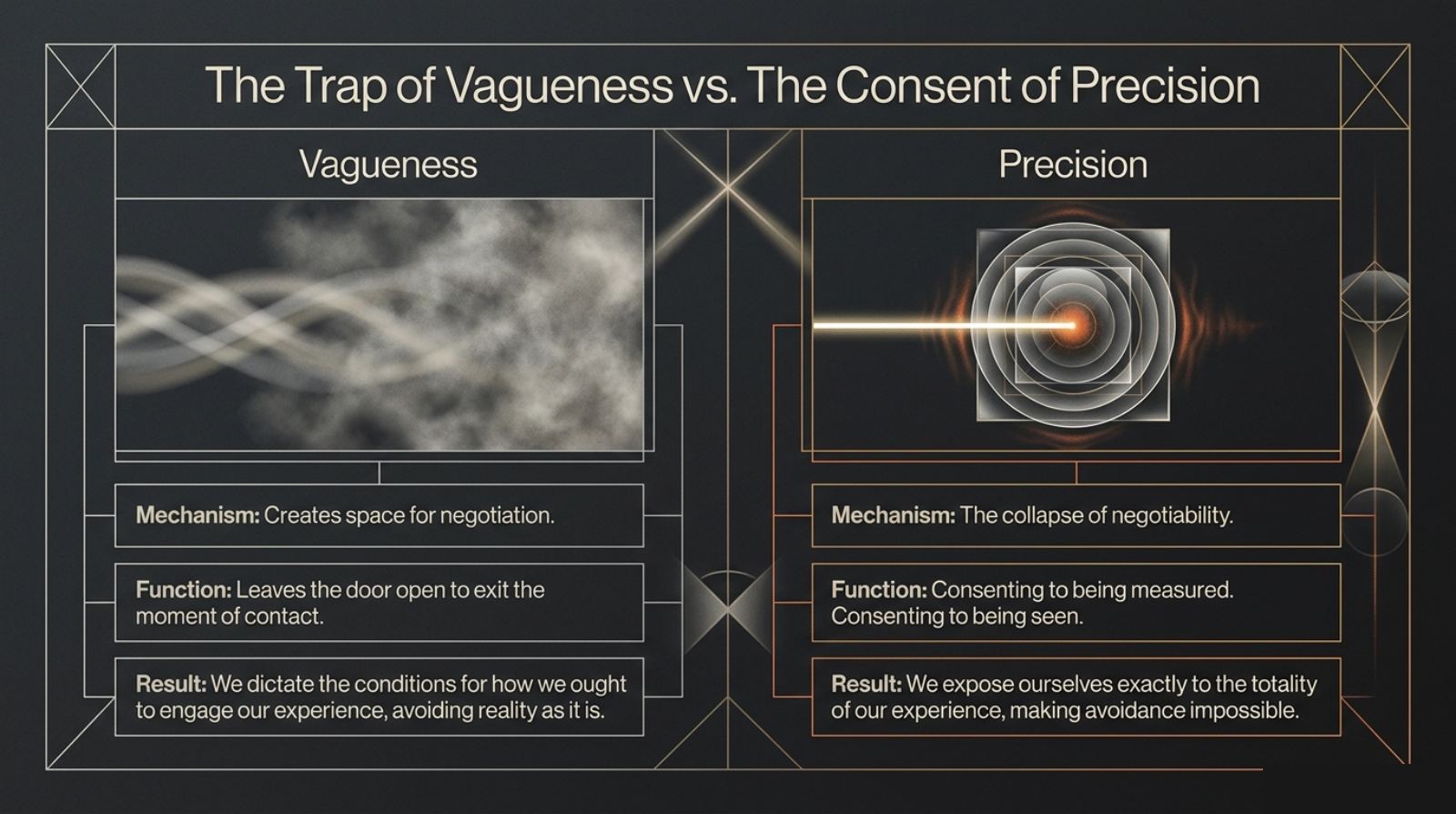
What allows this negotiation to persist is vagueness. Not just conceptual vagueness, but lived vagueness — imprecision in how you relate to your experience, in how you describe it, in how you commit to it. Vagueness leaves things open. It creates room to adjust, to reinterpret, to partially engage without fully entering. As long as that room exists, the structure remains intact. Precision removes that room.
The Necessity of Precision
Precision here is not about being intellectually exact. It is not about having better definitions or sharper concepts. It is about no longer leaving your participation undefined. It is about meeting what is present without softening it, without qualifying it, without inserting conditions for how you will engage.
To be precise is to consent — to be seen as you are, to be measured without adjustment, to encounter your experience without first negotiating its terms. When precision is present, the subtle exits begin to close. Not because you force them shut, but because the space they rely on is no longer available.
 Tap to enlarge
Now it starts to become clear that this cannot be resolved through effort alone. You cannot simply decide to stop negotiating. Because the same system that negotiates is the one attempting to stop. It controls the intensity, the duration, and the interpretation of your effort. It determines when enough is enough. So even your attempt to be more precise can become another form of negotiation.
The Need for Conditions
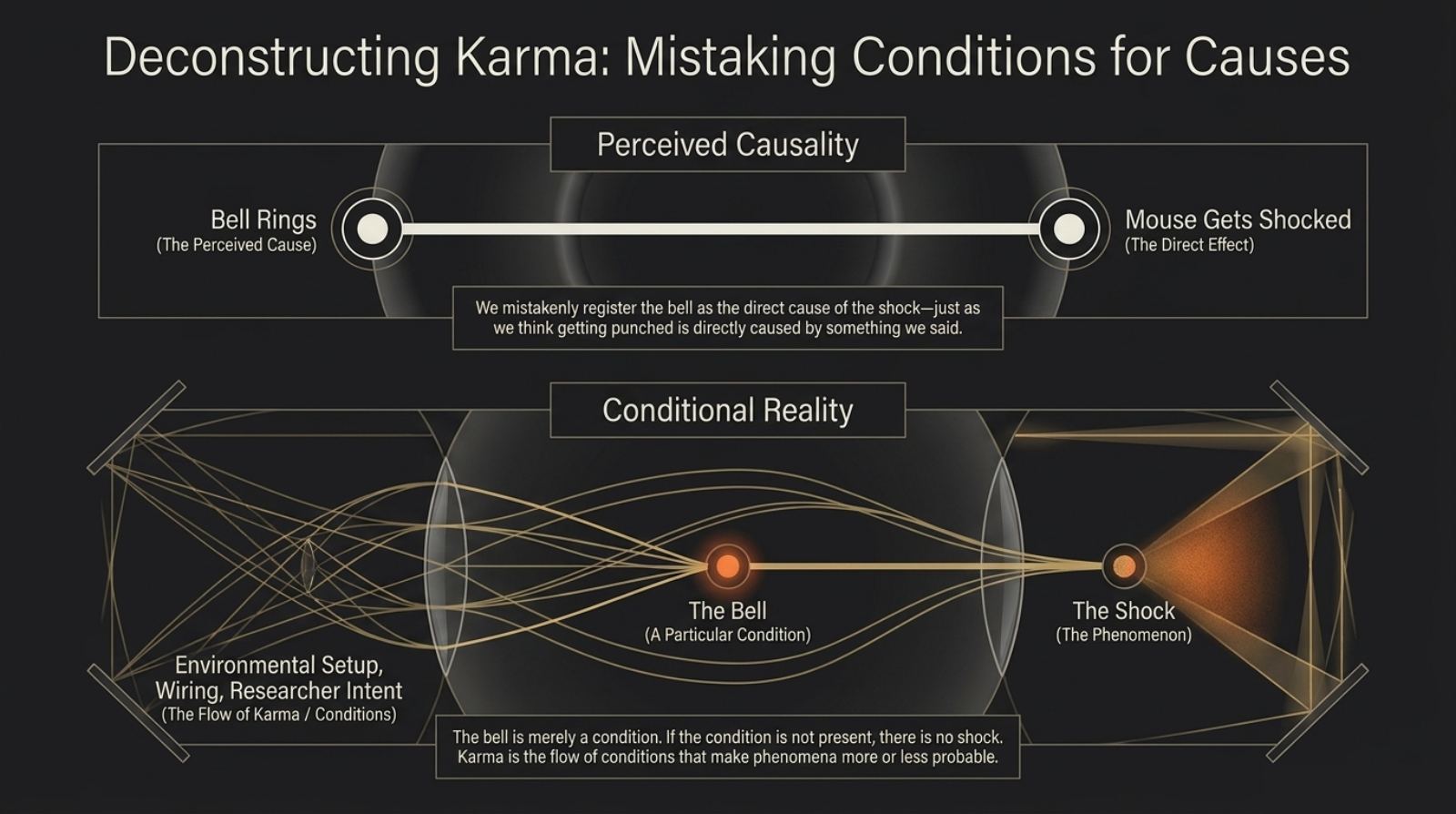
This is why conditions become necessary. Not as an external authority, and not as a rigid prescription, but as a removal of optionality. Conditions that do not bend to your preference. Conditions that do not allow you to reinterpret or withdraw without consequence. Conditions that expose, directly and without ambiguity, the exact points at which you refuse to remain.
 Tap to enlarge
In your everyday life, participation is almost always conditional. You engage when circumstances align, and you withdraw when they do not. You tell yourself, often implicitly, that you will show up fully if certain conditions are met — if you feel ready, if the environment is right, if the discomfort is manageable. But those conditions define the limits of your participation. They ensure that you never encounter yourself beyond them.
Training, in this context, is not about creating a separate space for practice. It is about removing those conditions. It is about encountering the situations you would normally reject, without adjusting them to fit your preferences.
Beyond Conditional Participation
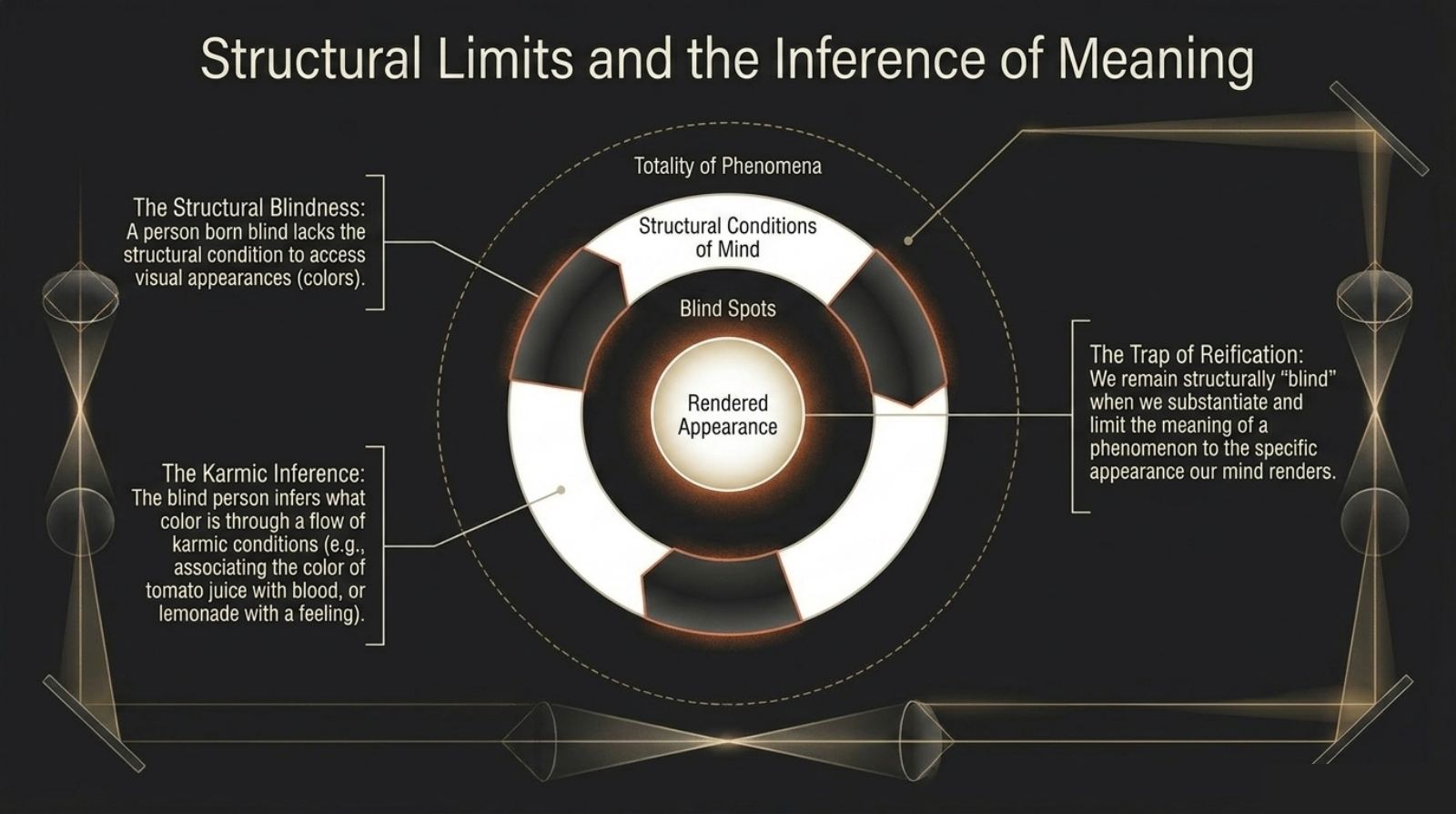
Because there is no escaping your life. You are already in contact with the totality of your experience. There is no position outside of it, no environment you can move to that removes you from what is happening. The only thing that varies is how you participate.
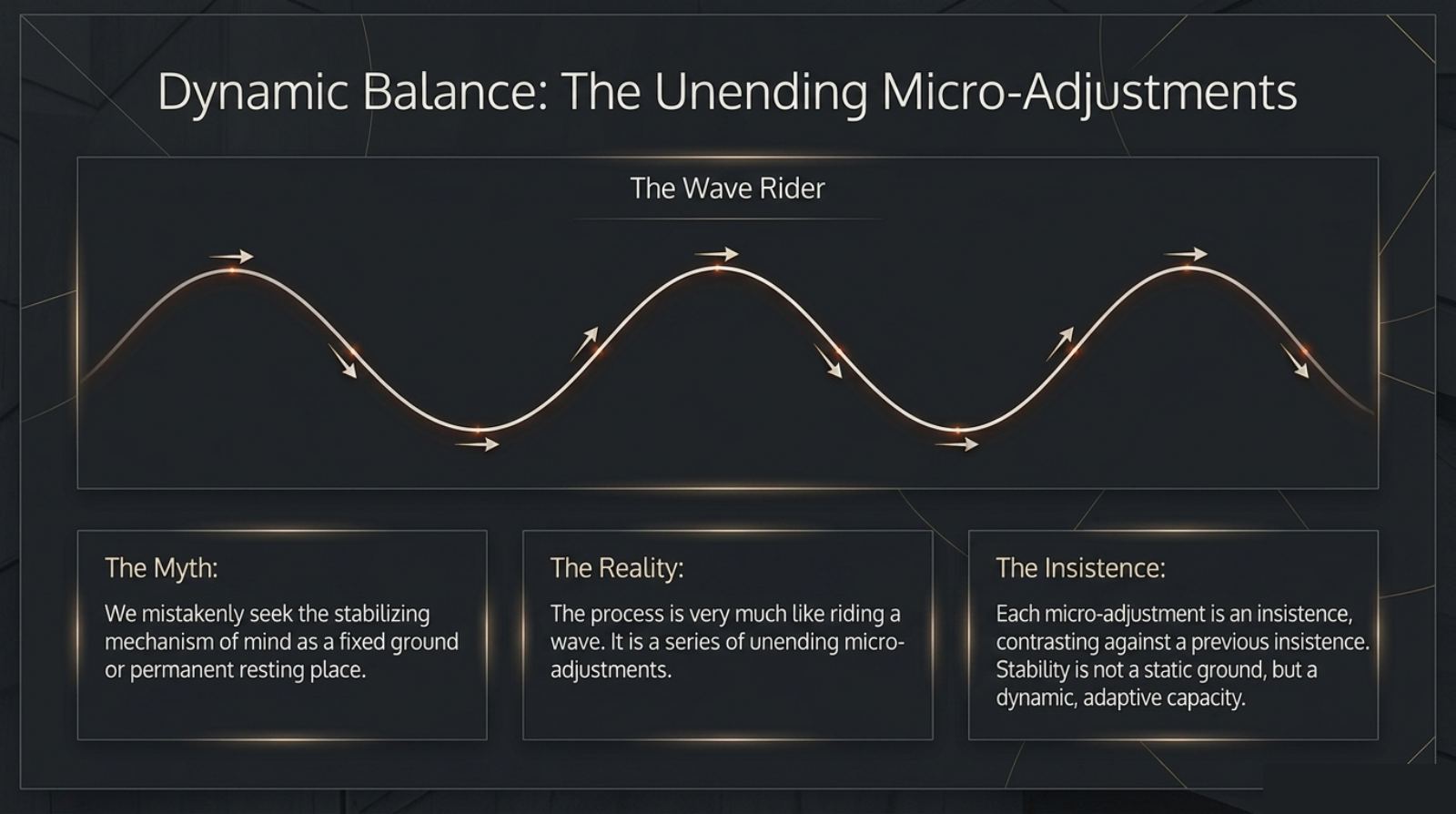
And that participation is not fixed. It is not something you establish once and maintain. It is continuously shaped through small, almost imperceptible adjustments — moments where you tighten or release, where you insist or allow, where you move to resolve or remain with what has not yet resolved. These micro-adjustments accumulate. They determine the structure of your experience over time.
 Tap to enlarge
The Choice to Rest
Within this, something becomes available. Not as an outcome, but as a possibility: the choice to rest. Not resting as withdrawal, or as disengagement, but as a refusal to immediately resolve what is arising. A refusal to impose a condition on your participation. A willingness to remain in contact without moving to stabilize the moment on your own terms.
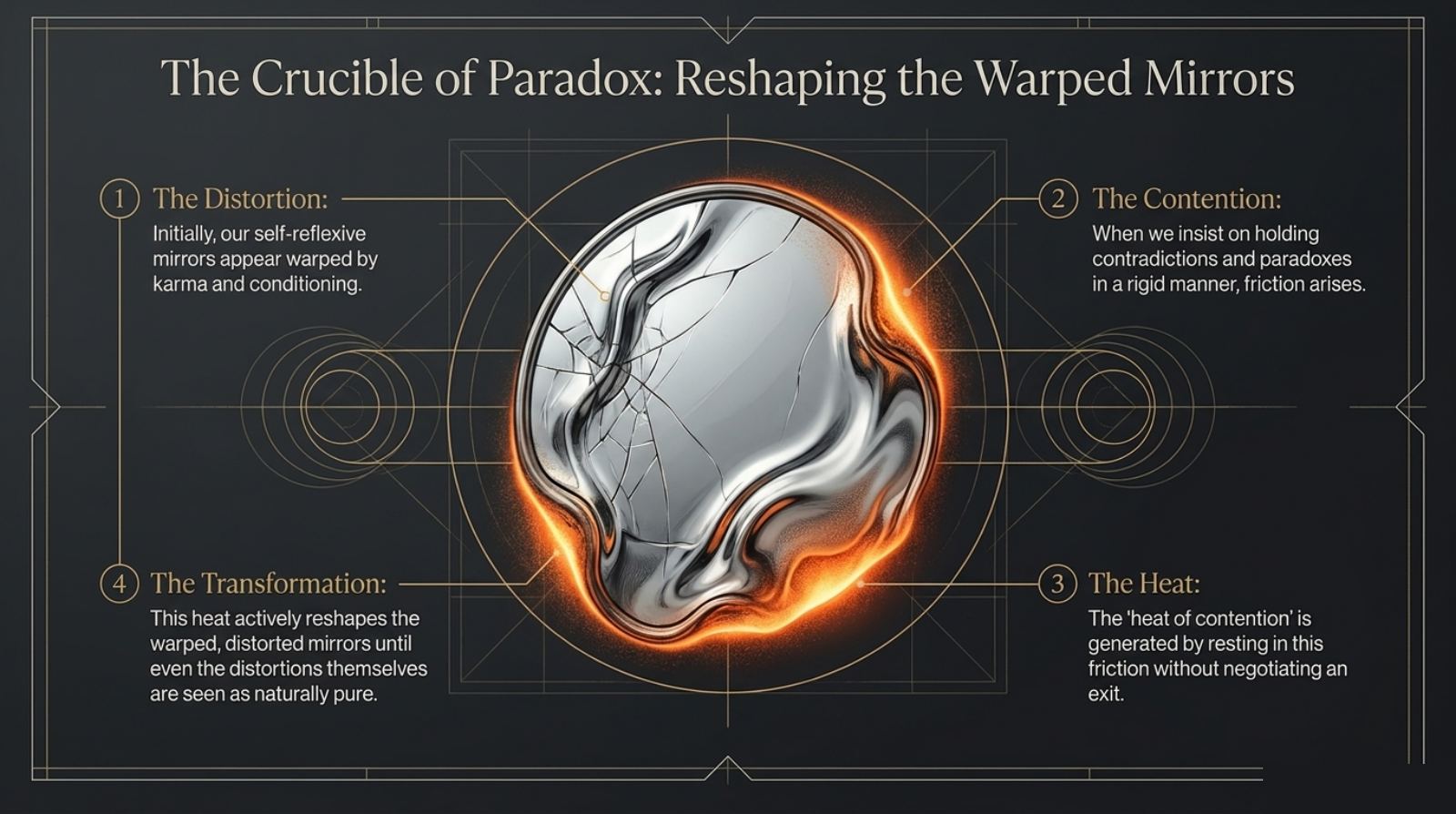
This choice is not something you can sustain through willpower alone. It becomes possible when the usual negotiations are no longer available — when the conditions of your life do not allow you to exit in the ways you are accustomed to. And when it does occur, even briefly, it begins to recondition the way experience is generated. Not by changing what appears, but by altering how it is met.
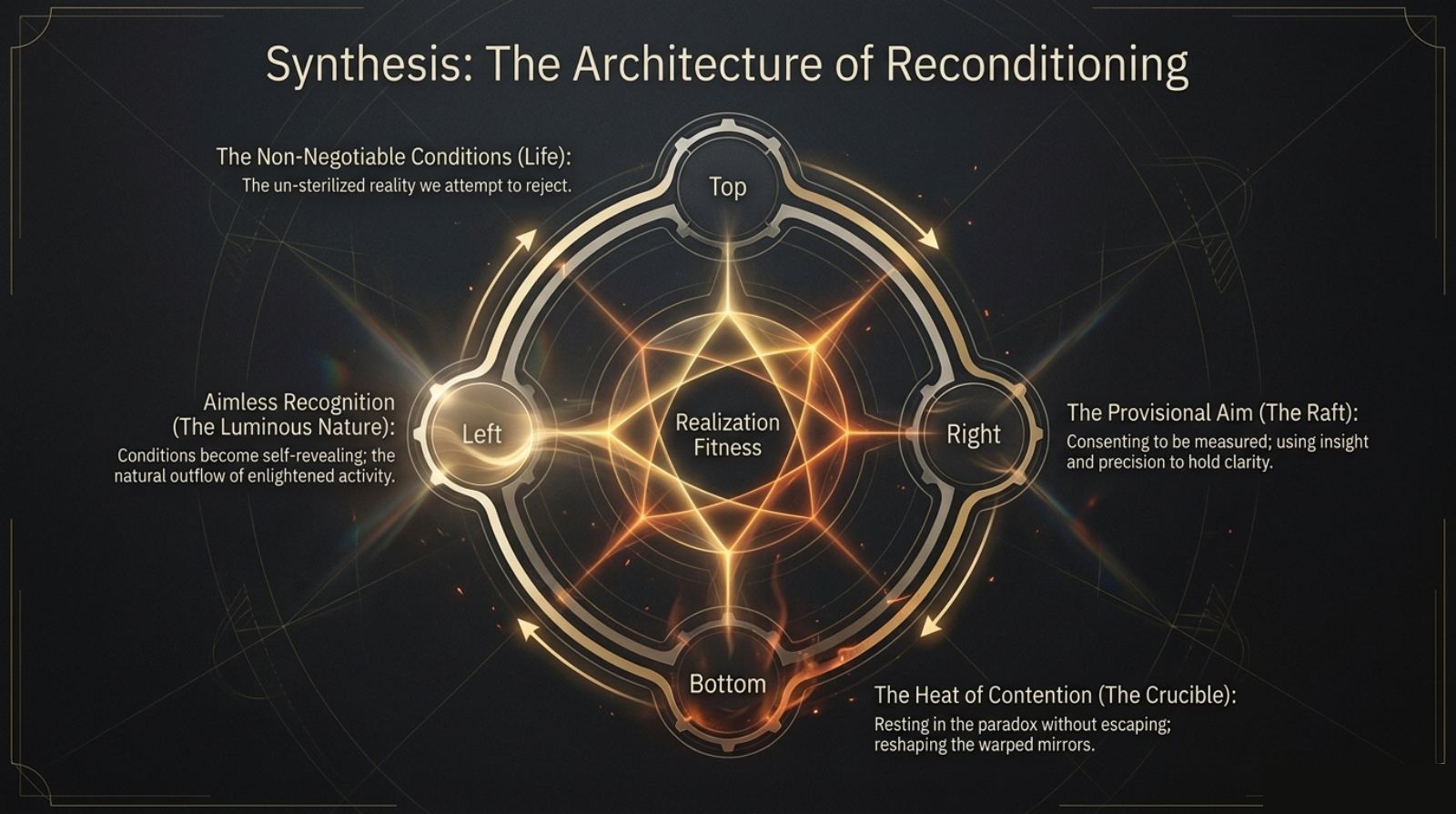
The heat of contention — resting in paradox without negotiating an exit — is what reshapes the structure. Not understanding it. Remaining in it.
 Tap to enlarge
Developing Capacity
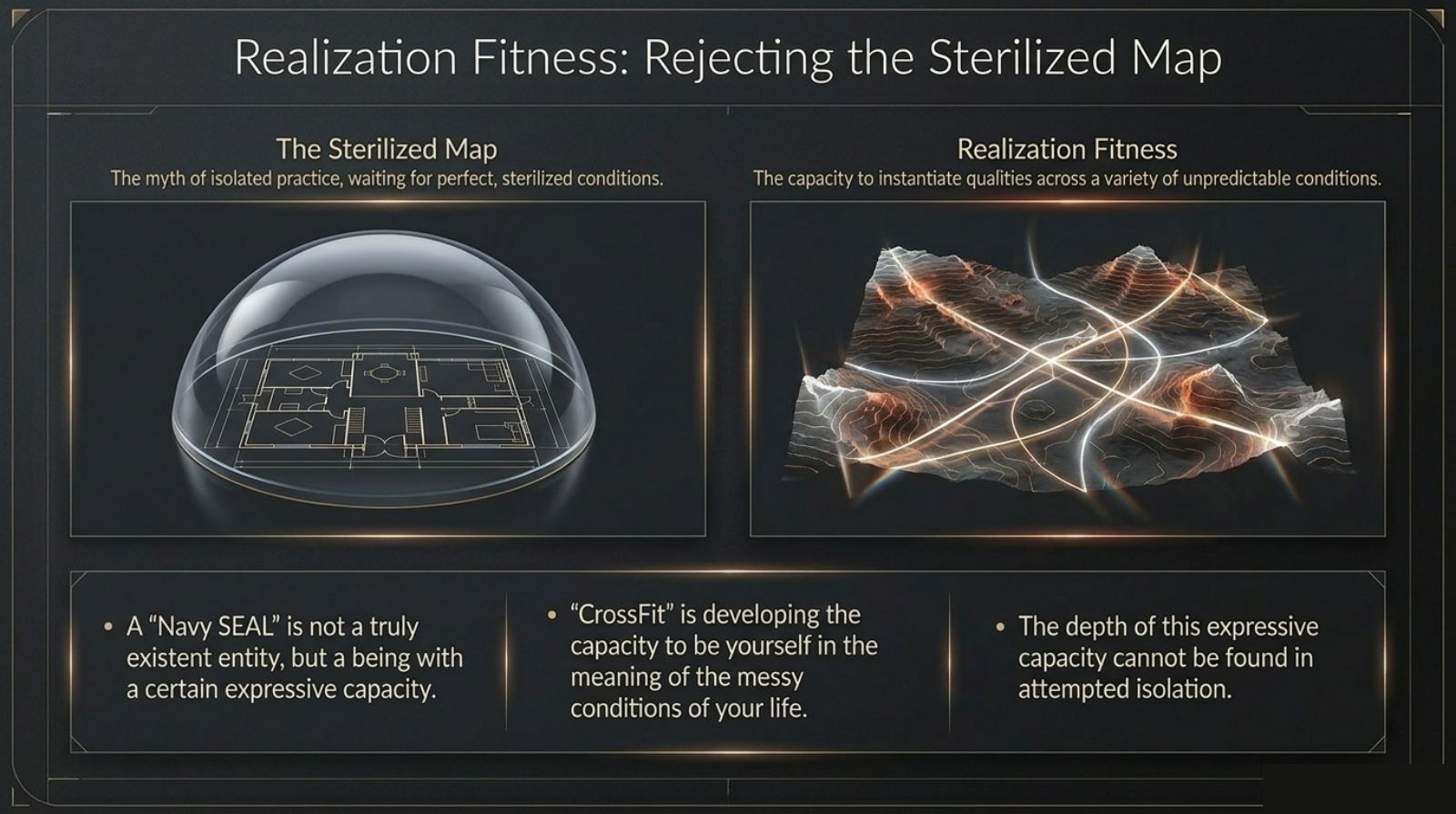
From this perspective, what is being developed is not a state to achieve, but a capacity. A capacity to remain present across varying conditions, without requiring those conditions to change. A capacity to participate without first ensuring that the experience aligns with your preferences. This is what is meant by realization fitness. Not an endpoint, not a final understanding, but an ongoing ability to meet your life without negotiation.
 Tap to enlarge
Realization fitness is not a practice isolated from the rest of your life. It is the capacity to be yourself — in the exact conditions you find most difficult to inhabit. The ones you have been quietly waiting to resolve before you show up fully.
 Tap to enlarge
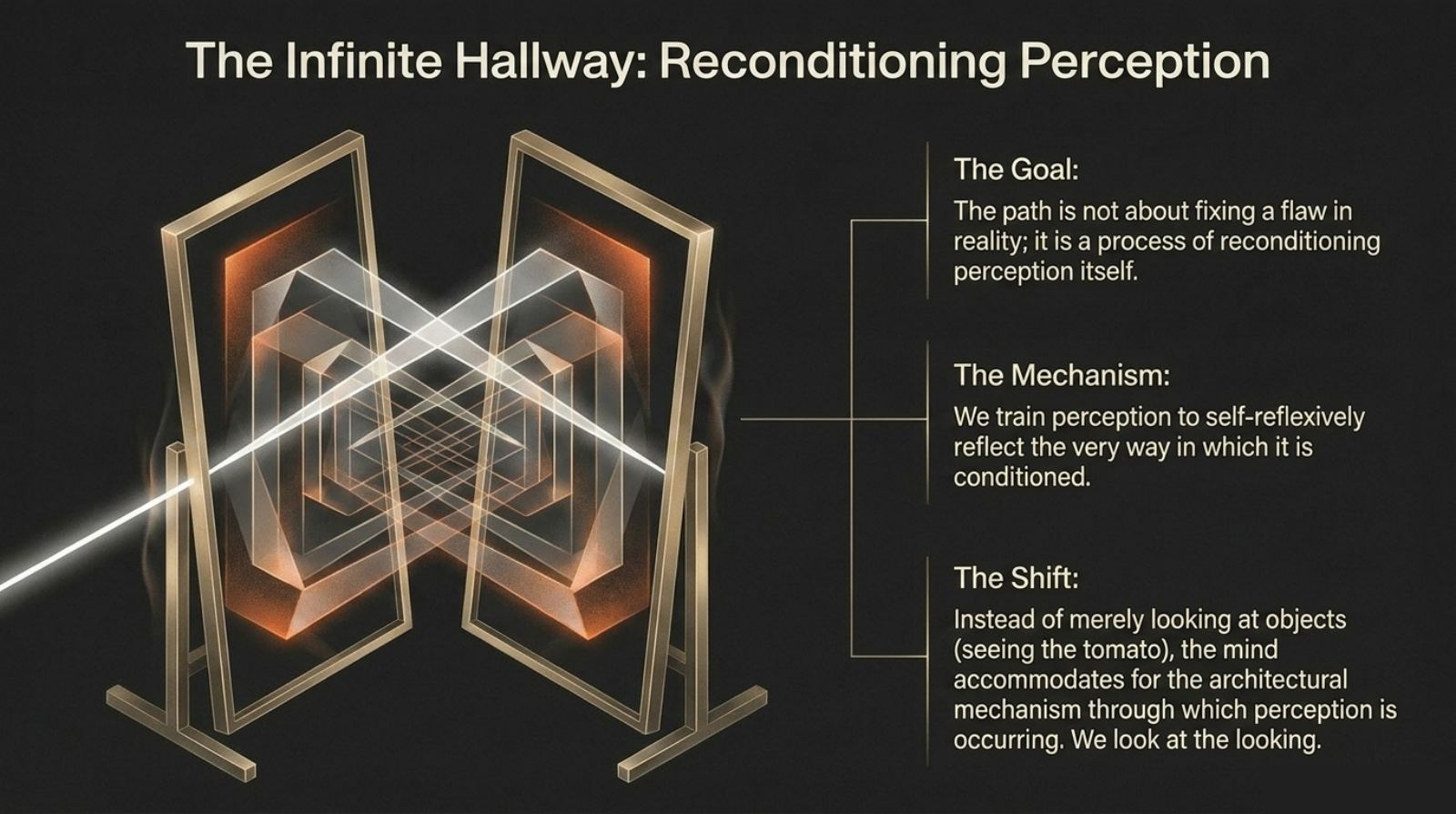
The path is not about fixing a flaw in reality. It is a process of reconditioning perception itself — training the mind to self-reflexively reflect the very way in which it is conditioned. Not looking at objects, but looking at the looking.
 Tap to enlarge
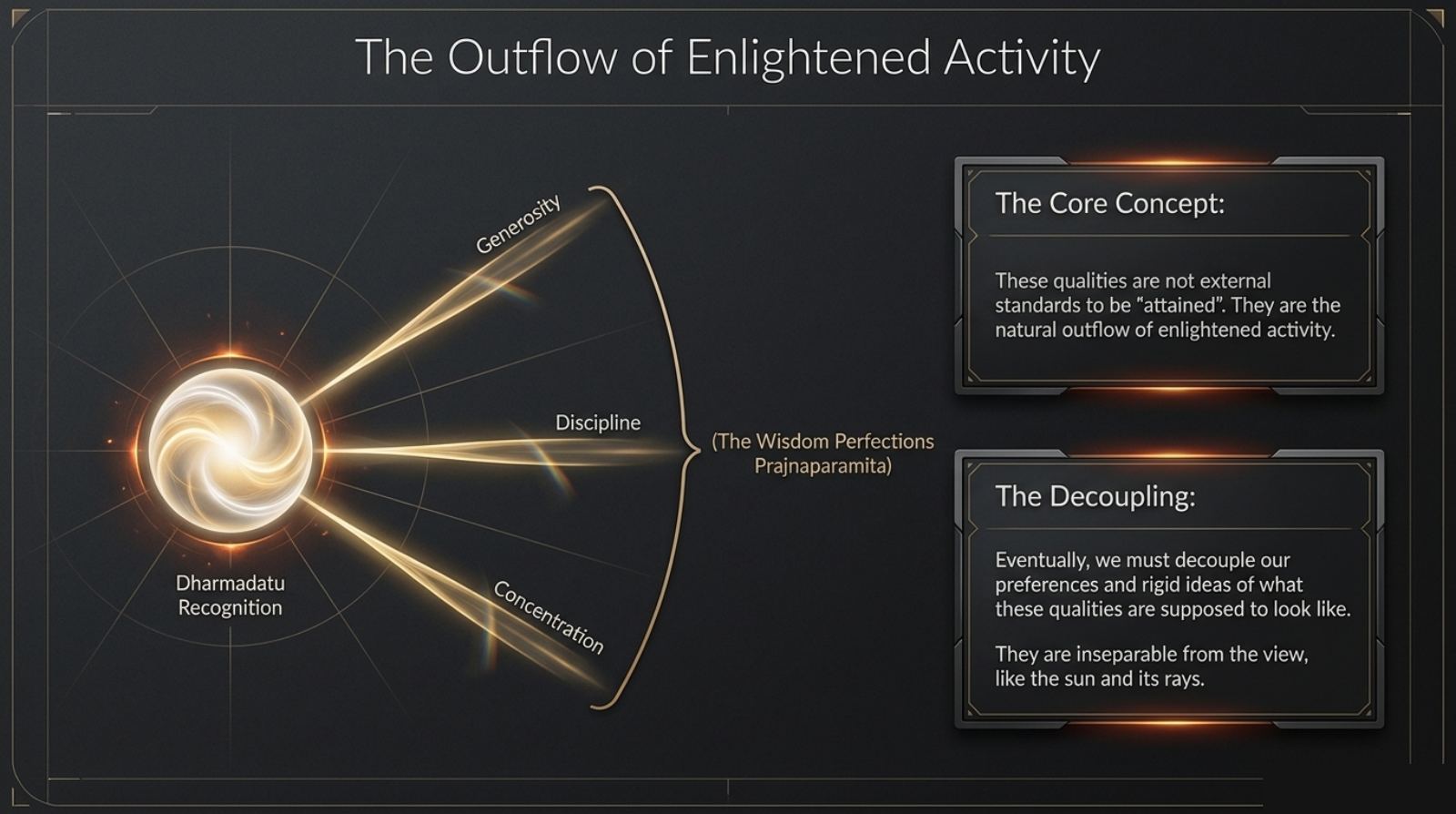
These qualities — generosity, discipline, concentration — are not external standards to attain. They are the natural outflow of recognition. Inseparable from the view, the way the sun's rays are inseparable from the sun. You do not produce them. You stop blocking them.
 Tap to enlarge
The Final Question
So at the end of this arc, the question is no longer whether you understand what is happening. You do. The question is whether anything in your current way of operating actually prevents you from continuing exactly as you have been. Because if there is still space to negotiate — still room to adjust the terms of your participation — then nothing fundamental changes. You will continue to see, to understand, and to repeat.
 Tap to enlarge
What remains, then, is not to acquire something new, but to remove what has been quietly operating all along: the conditions you place on your participation. And to meet your life without them.
The conditions you attempt to reject are exactly where the training lies. Nothing changes but the way you participate.
Clips
Life & Sits Aren't Separate — Not Beating Yourself Up
From Discussion 5, Room 1
The sit isn't separate from life, and the same applies to self-judgment. Beating yourself up isn't proof of seriousness — it's often another exit. The deeper move is fitness without self-aggression as the engine. From Discussion 5, Room 1.

Good Sit vs. Bad Sit → Intentional vs. Mechanical
From Discussion 5, Room 1
The distinction stops being good sit versus bad sit and becomes intentional versus mechanical. A sit isn't valuable just because it happened — the question is whether there's actual contact and participation, or just repetition. From Discussion 5, Room 1.
A Place Where Your Deepest Desires Are Taken Seriously
From Discussion 5, Room 1
A rare container where the deepest spiritual desire isn't mocked, minimized, or turned into irony. When a person's highest aspiration is actually received and held, practice stops being private fantasy and becomes a lived vow. From Discussion 5, Room 1.