The Act of Leaving

Transmission 1
The Act of Leaving
The complete Lesson 1 teaching. The small, constant act of leaving the present moment — how it happens, why it feels necessary, and what staying actually asks of you.

Discussion 1 - Room 1
Led by Albert
The complete Lesson 1 discussion room, unedited, led by Albert. Practitioners working the teaching in real time — questions, resistance, and live guidance.
Discussion 1 - Room 2
Led by Adrian
The complete Lesson 1 discussion room, unedited, led by Adrian. Practitioners working the teaching in real time — questions, resistance, and live guidance.

Discussion 1 - Room 3
Led by Shreyash
The complete Lesson 1 discussion room, unedited, led by Shreyash. Practitioners working the teaching in real time — questions, resistance, and live guidance.
Videos
Darko Answers: What Is Contact?
From Discussion 1, Room 1
A direct answer to the question that opens everything else: what does it mean to make contact with experience. From Discussion 1, Room 1.
Exiting via Thoughts of Future Enlightenment
From Discussion 1, Room 1
Even the idea of enlightenment can function as an exit — a future state that lets attention leave the present moment in its name. From Discussion 1, Room 1.
Exiting by Getting Lost in Experience
From Discussion 1, Room 1
Getting absorbed into what arises can itself be an exit — attention leaves contact by dissolving into experience rather than staying with it. From Discussion 1, Room 1.
What Is Unconditioned Contact?
From Discussion 1, Room 1
Contact without conditions — meeting experience before preference shapes it. What it means to touch the moment without requiring it to be different. From Discussion 1, Room 1.
Opening the Aperture of Association
From Discussion 1, Room 1
Widening how you relate to experience so the mechanics of your own exits become visible — why and how you leave, not just that you do. From Discussion 1, Room 1.
The Point of Making Contact
From Discussion 1, Room 1
Jon asks why contact matters at all; Sonja answers in terms of resistance and choice — contact as where the actual decision gets made. From Discussion 1, Room 1.
Orienting to Pain as Signal
From Discussion 1, Room 2
Pain re-read as information rather than threat — feeling it directly instead of managing it. From Discussion 1, Room 2.
Feeling the Container as an Anchor
From Discussion 1, Room 2
How the felt sense of the CC container itself provides stability in practice — belonging as a condition for staying, not a distraction from it. From Discussion 1, Room 2.
Contending with Doubt and the "North Star"
From Discussion 1, Room 2
Expectations of rigor generate doubt; the insistence on a fixed reference point is itself examined. From Discussion 1, Room 2.

Distractions and Distinctions from Transmission
From Discussion 1, Room 3
Sorting what pulls attention away from transmission from what belongs inside it. From Discussion 1, Room 3.
Guided Meditation vs Transmission — Life as Practice
From Discussion 1, Room 3
The difference between following guidance and receiving transmission; practice stops being an activity and becomes the whole field. From Discussion 1, Room 3.
Sirens and Our Relationship to Phenomena
From Discussion 1, Room 3
Using an ambient siren during transmission as a live case study in how we relate to whatever arises, not just what we expect to arise. From Discussion 1, Room 3.
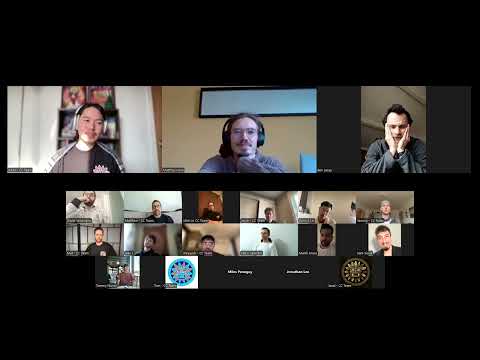
An Inquiry on Courage
From Discussion 1, Room 3
Courage as the willingness to stay when the system wants to leave. From Discussion 1, Room 3.