The Act of Leaving
See the moment you reject the present, and how it becomes suffering
Practice This Week
This week, watch for the exact moment attention moves to leave — the small pull toward 'this should be different.' Don't correct it. Don't improve it. Just see it. The seeing is the whole practice.
Discussion
The live discussion room from this lesson. Watch it as another transmission — feel into the others as they ask questions and speak, and stay open to direct relating.

Discussion 1 - Room 1
Led by Albert
The complete Lesson 1 discussion room, unedited, led by Albert. Practitioners working the teaching in real time — questions, resistance, and live guidance.
Discussion 1 - Room 2
Led by Adrian
The complete Lesson 1 discussion room, unedited, led by Adrian. Practitioners working the teaching in real time — questions, resistance, and live guidance.

Discussion 1 - Room 3
Led by Shreyash
The complete Lesson 1 discussion room, unedited, led by Shreyash. Practitioners working the teaching in real time — questions, resistance, and live guidance.
Reading Material
The Exit Is Already Happening
This is not a path, a progression, or a method to refine over time. It is something more immediate, and for most practitioners, harder to face:
You are not failing to arrive. You are actively leaving.
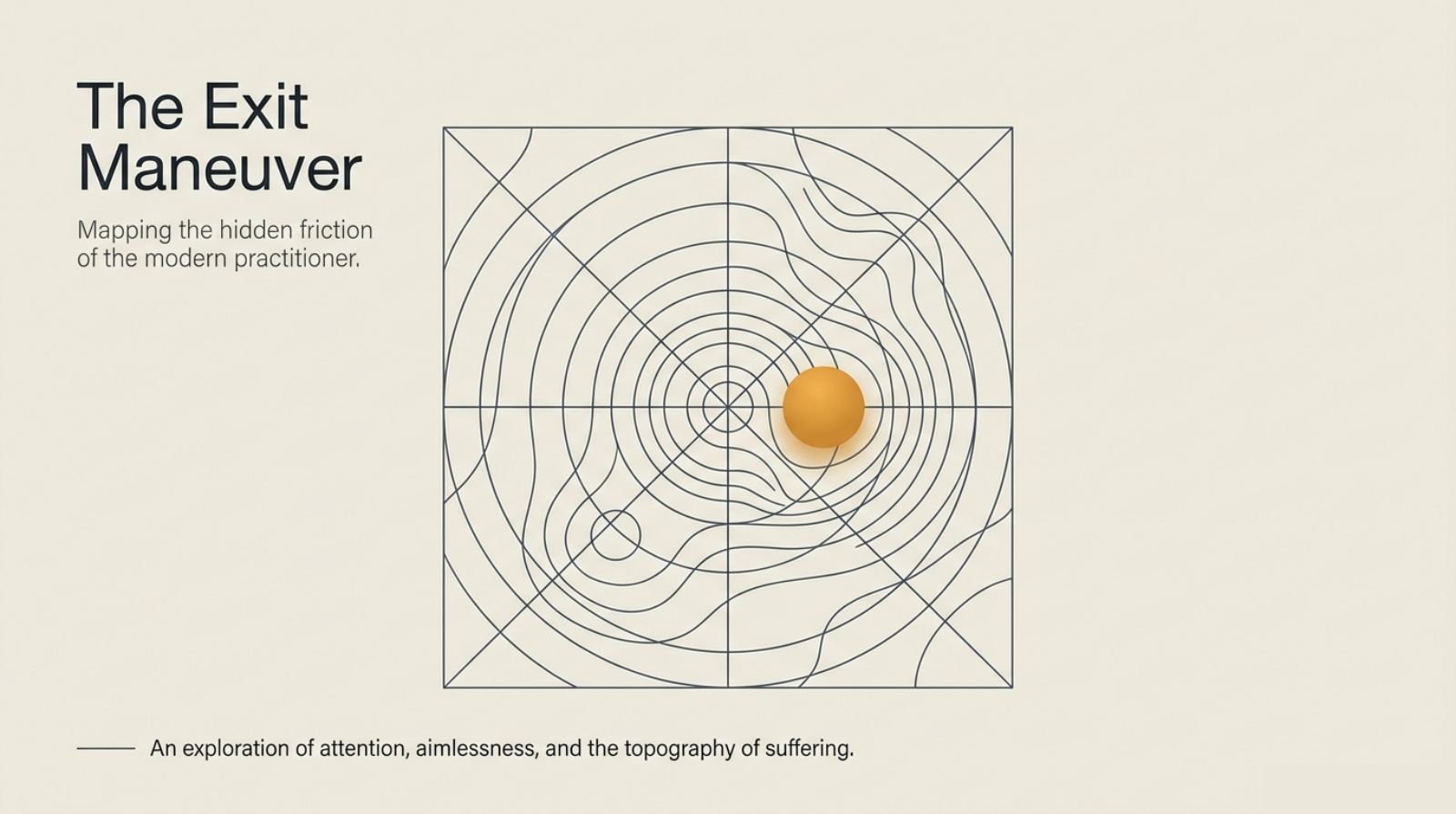
The central move is a reversal. Instead of orienting toward a future condition — some improved state, some stabilized clarity, some completed realization — it directs attention toward a present mechanism: the moment you attempt to exit, reject, or replace what is already here.
This moment is subtle, constant, and almost always missed. And yet it is the hinge on which the entire structure of suffering — and of practice — turns.
 Tap to enlarge
Suffering as a Mode of Participation
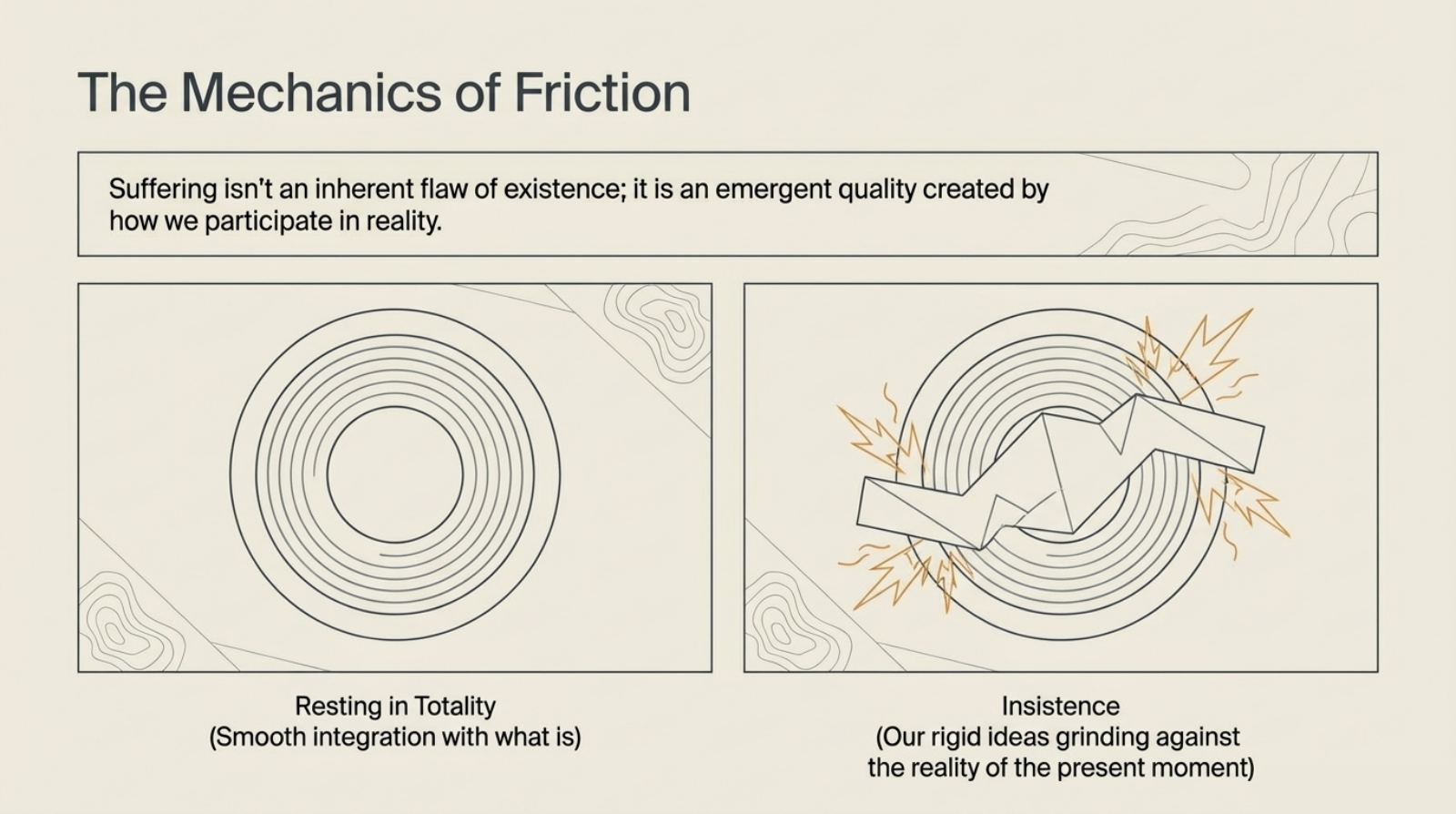
Suffering, in this frame, is not an inherent property of experience. It is not located in sensation, thought, or circumstance. It arises from how you are participating in what is happening.
More precisely, it appears when participation takes the form of:
- Insistence — this moment should be different
- Rejection — parts of experience are excluded
- Fragmentation — attention splits against itself
This is why rejecting yourself and rejecting reality are not two separate actions. They are the same movement.
Where you reject yourself, you reject the present. Where you reject the present, friction appears.
That friction — like a wheel grinding against its axle — is what we call suffering.
 Tap to enlarge
The Misdiagnosis: "The Problem Is the Moment"
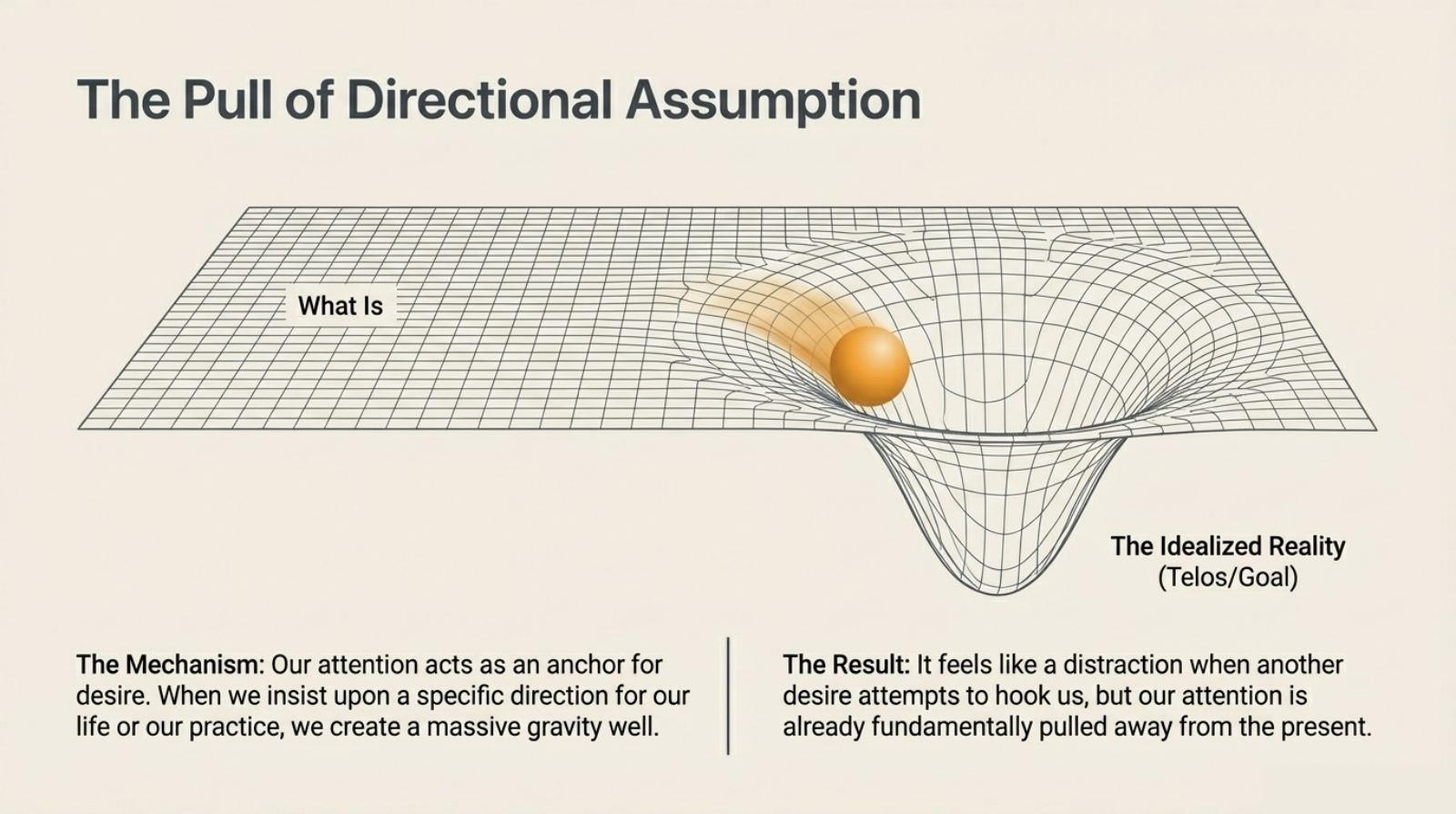
Most practitioners, even experienced ones, operate under a quiet, pervasive assumption: this moment is not yet correct. Something needs to change. I need to get somewhere else.
From this assumption an entire structure grows — technique optimization, state-seeking, future-oriented practice. But the structure is built on a misdiagnosis.
The issue is not the current moment. The issue is the movement away from it.
This is why the teaching does not introduce a new practice. It removes a false orientation.
 Tap to enlarge
Absorption Reframed
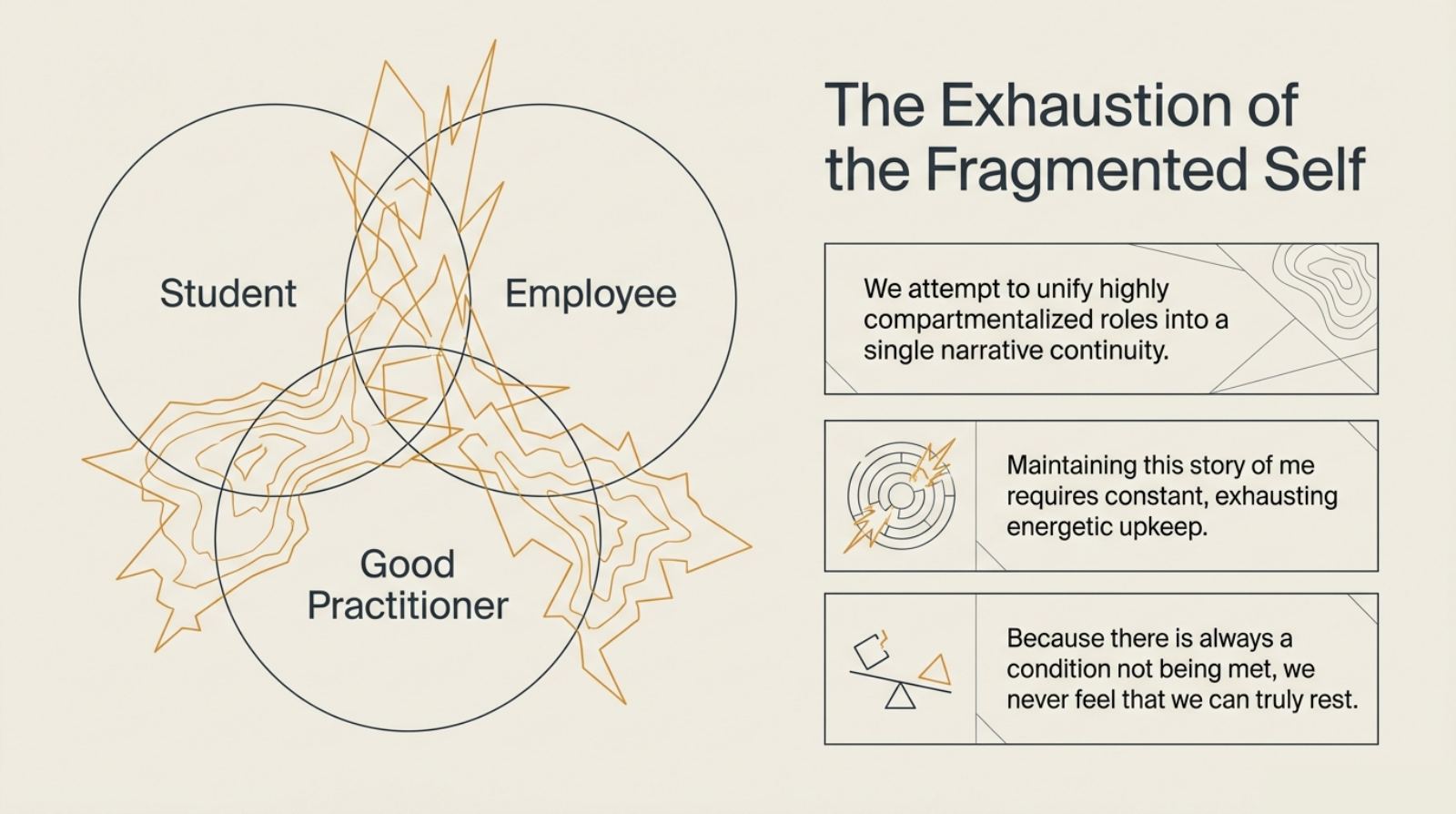
You are always absorbed.
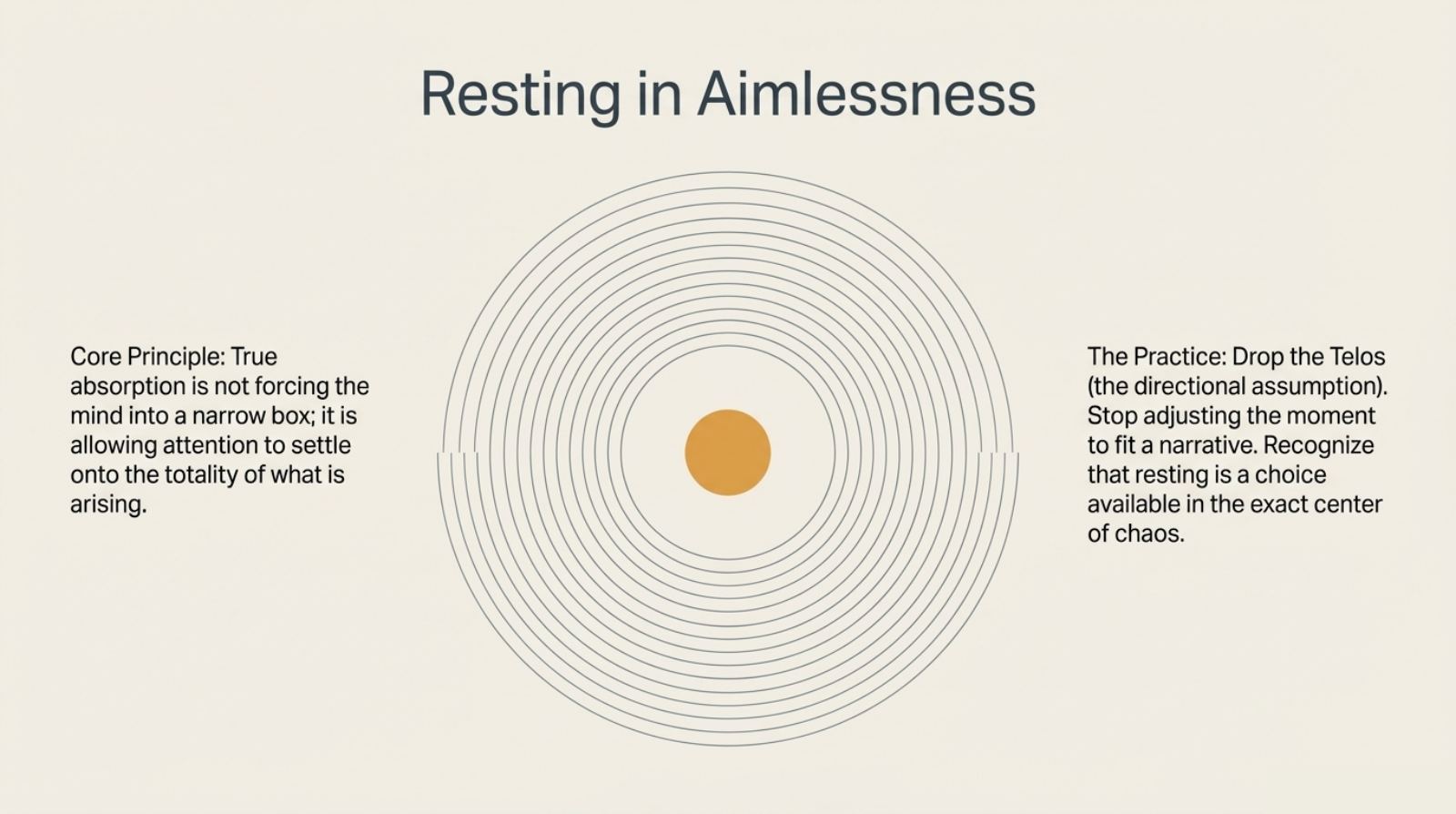
There is no such thing as "not being in absorption." The question is not whether you are absorbed, but what you are absorbed into, and how that absorption is structured.
Ordinary experience is not unabsorbed — it is absorption into a fragmented field: a field structured by competing preferences, unresolved insistences, and continuous micro-rejections.
 Tap to enlarge
Representational Reality and the Root of Exit
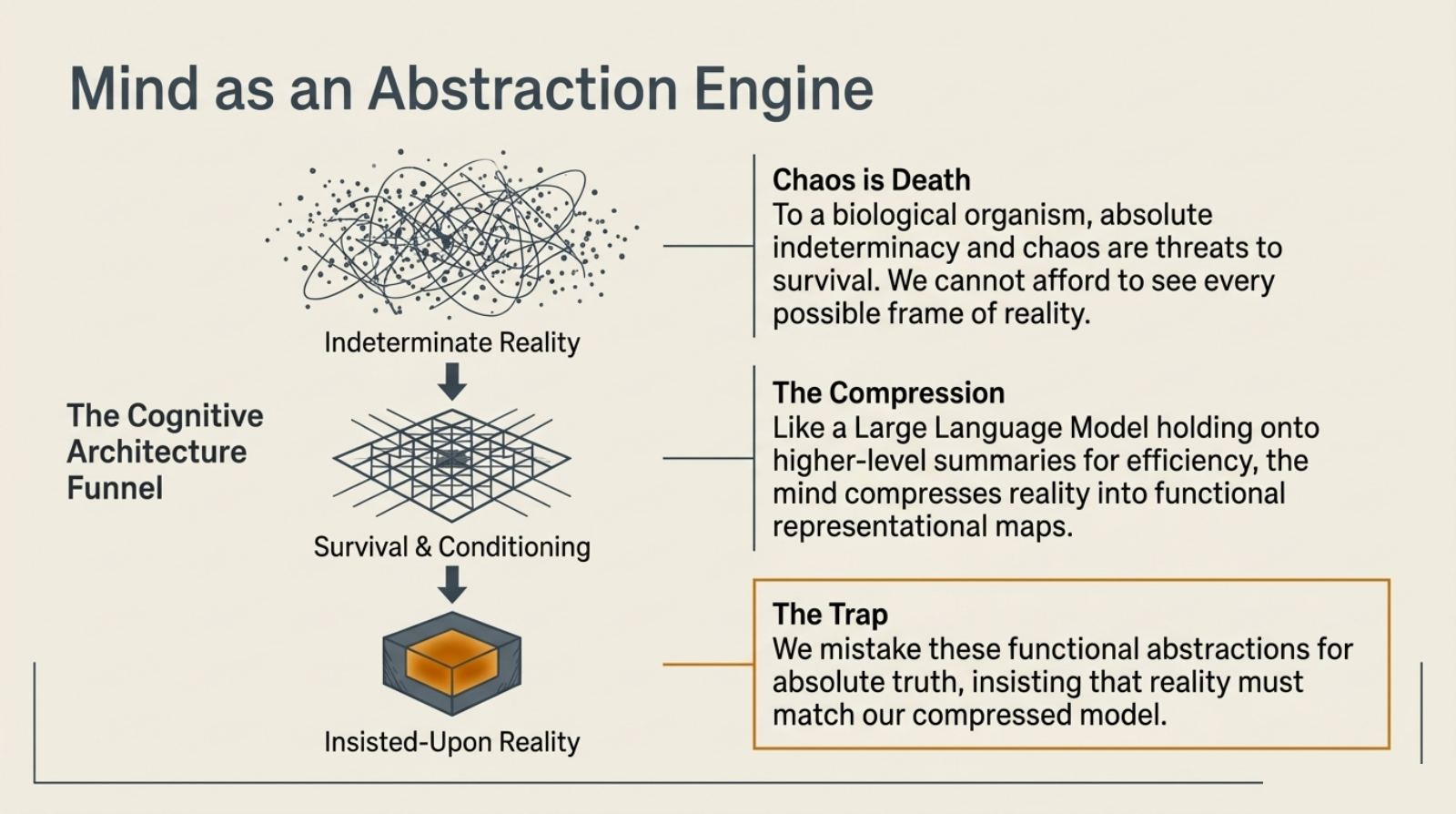
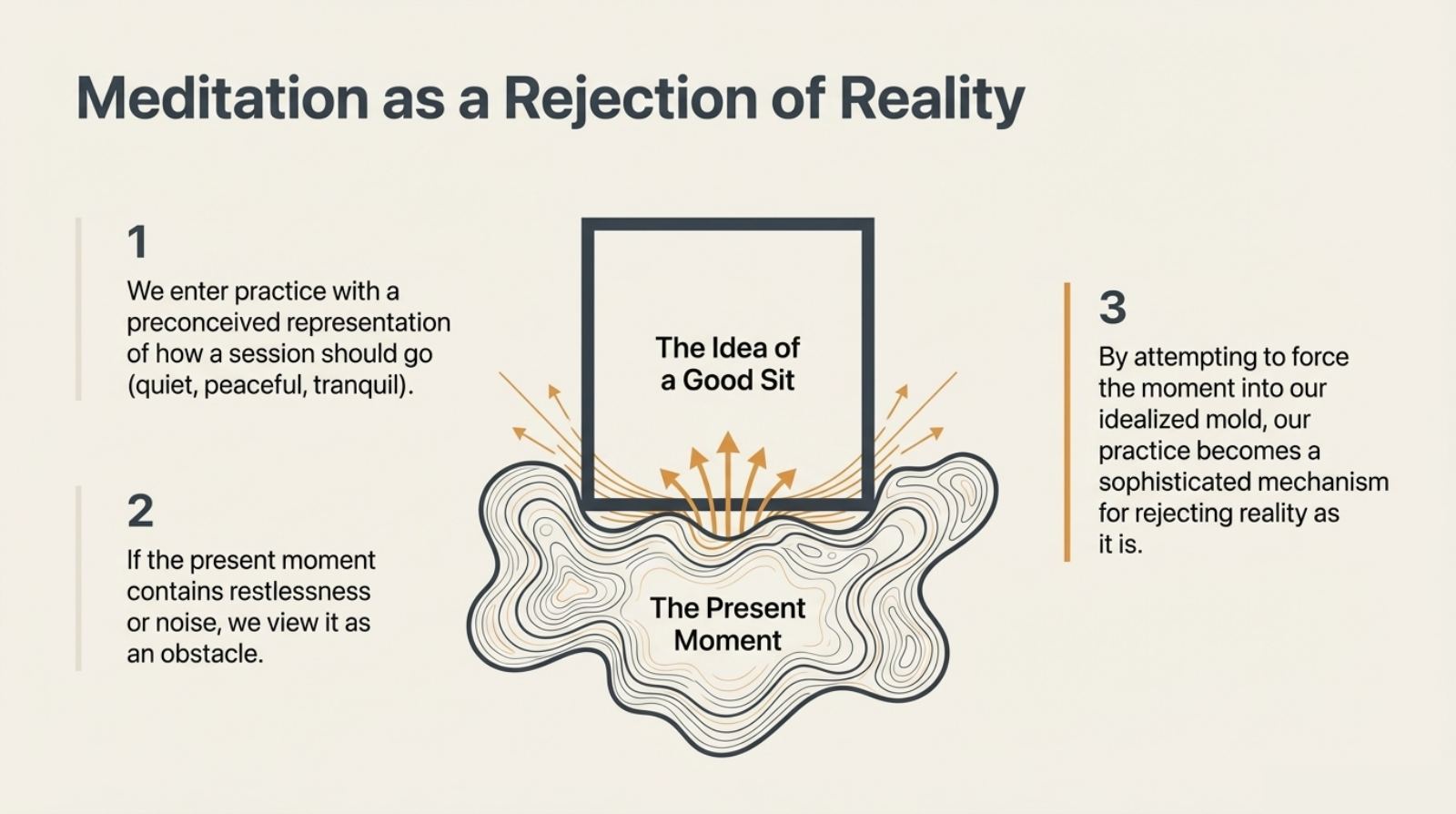
To function at all, the mind constructs representational maps, conceptual compressions, identity structures. These are not errors. They are necessary. Distortion begins the moment these maps become non-negotiable.
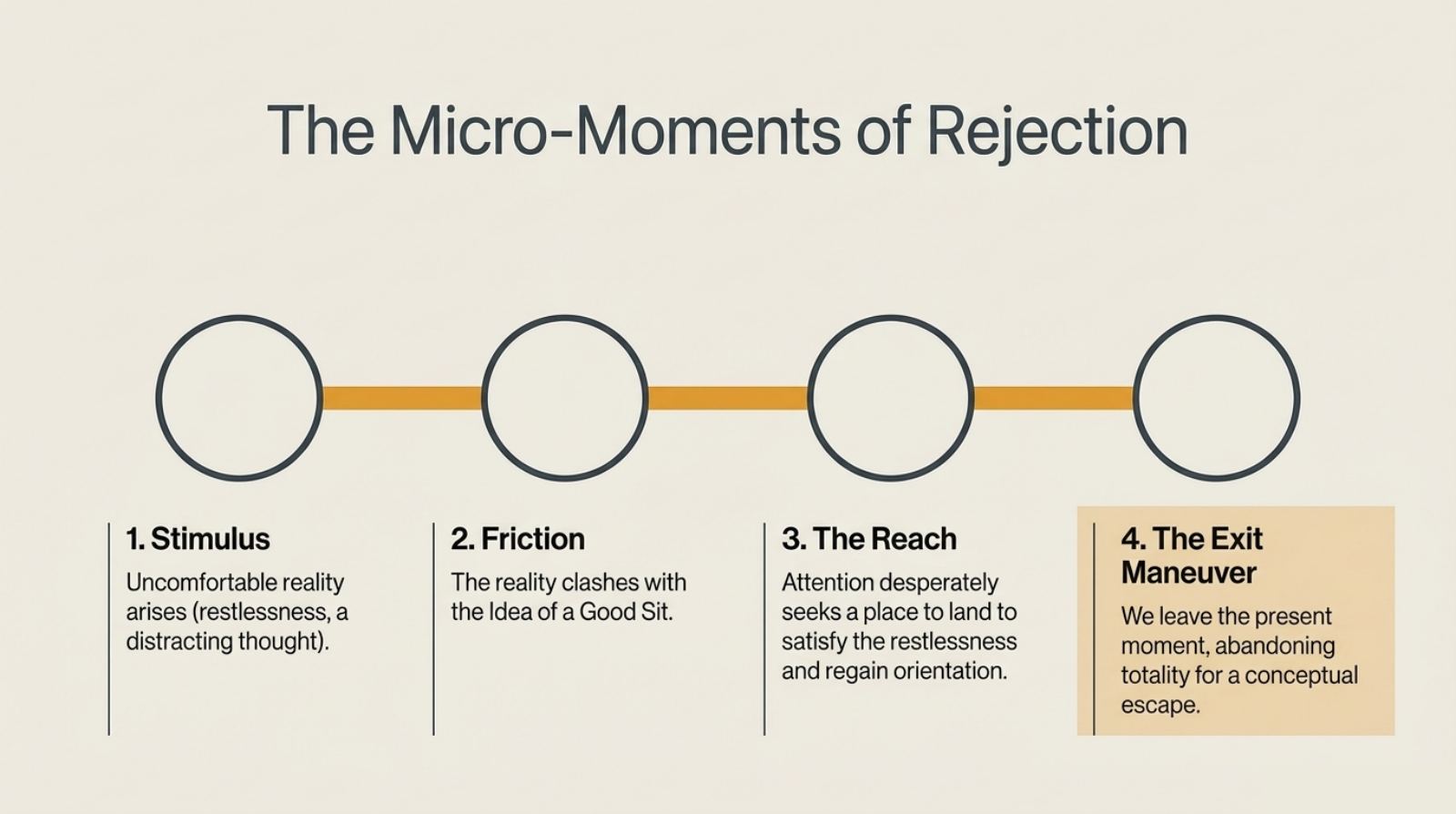
When reality does not match the map, friction appears. When friction appears, attention seeks an exit.
The exit takes many forms: adjusting the moment, reframing the experience, distracting attention, reaching toward a preferred state. But the structure is always the same — reality is rejected in favor of representation.
 Tap to enlarge
Survival Karma and the Mechanics of Ignoring
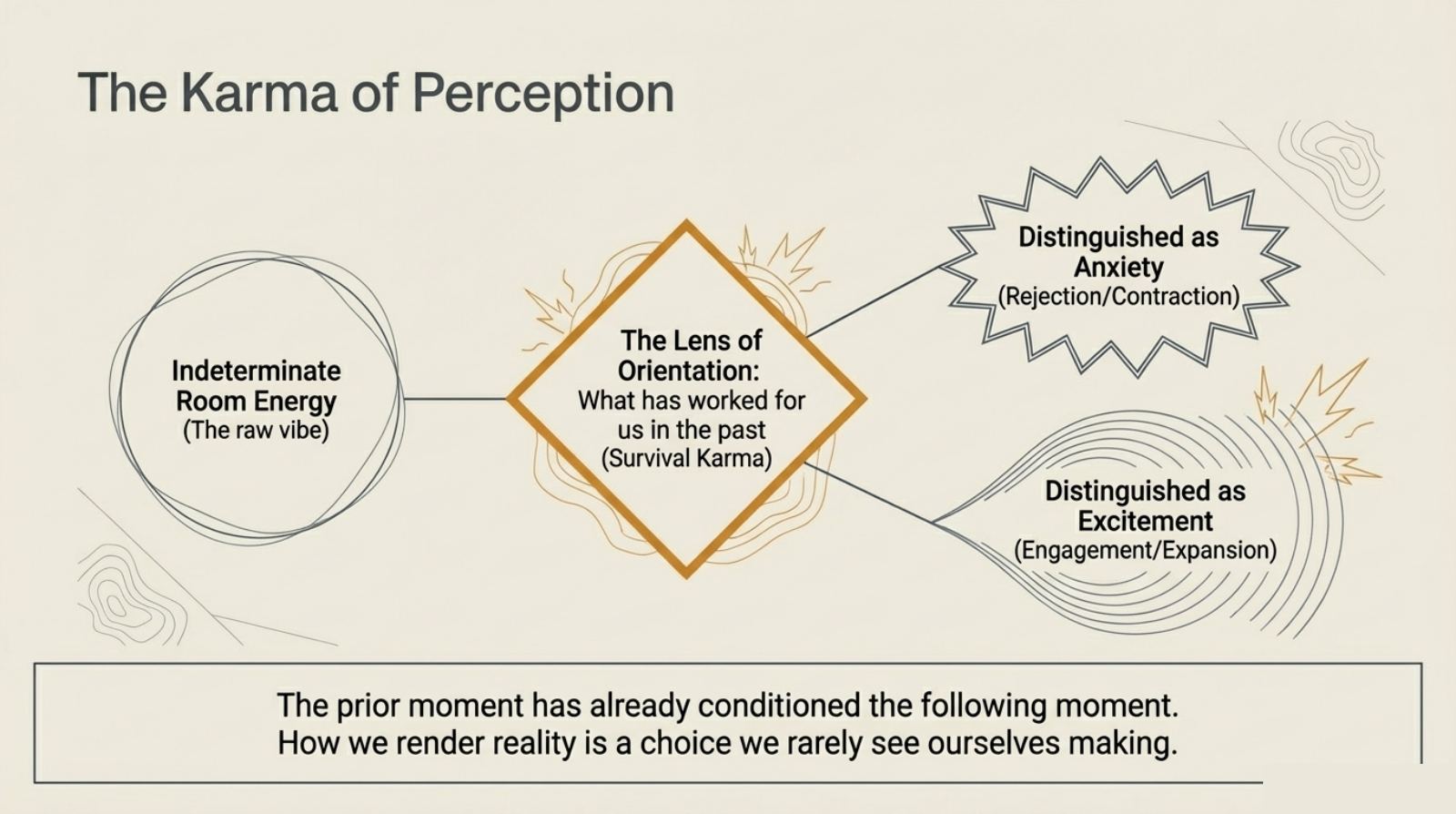
At a deeper level, the process is conditioned by what can be called survival karma. The system prioritizes what works, what stabilizes, what preserves continuity — not what is actually present. This produces a precise distortion:
Ignorance is not the absence of awareness. It is selective attention shaped by conditioning.
 Tap to enlarge
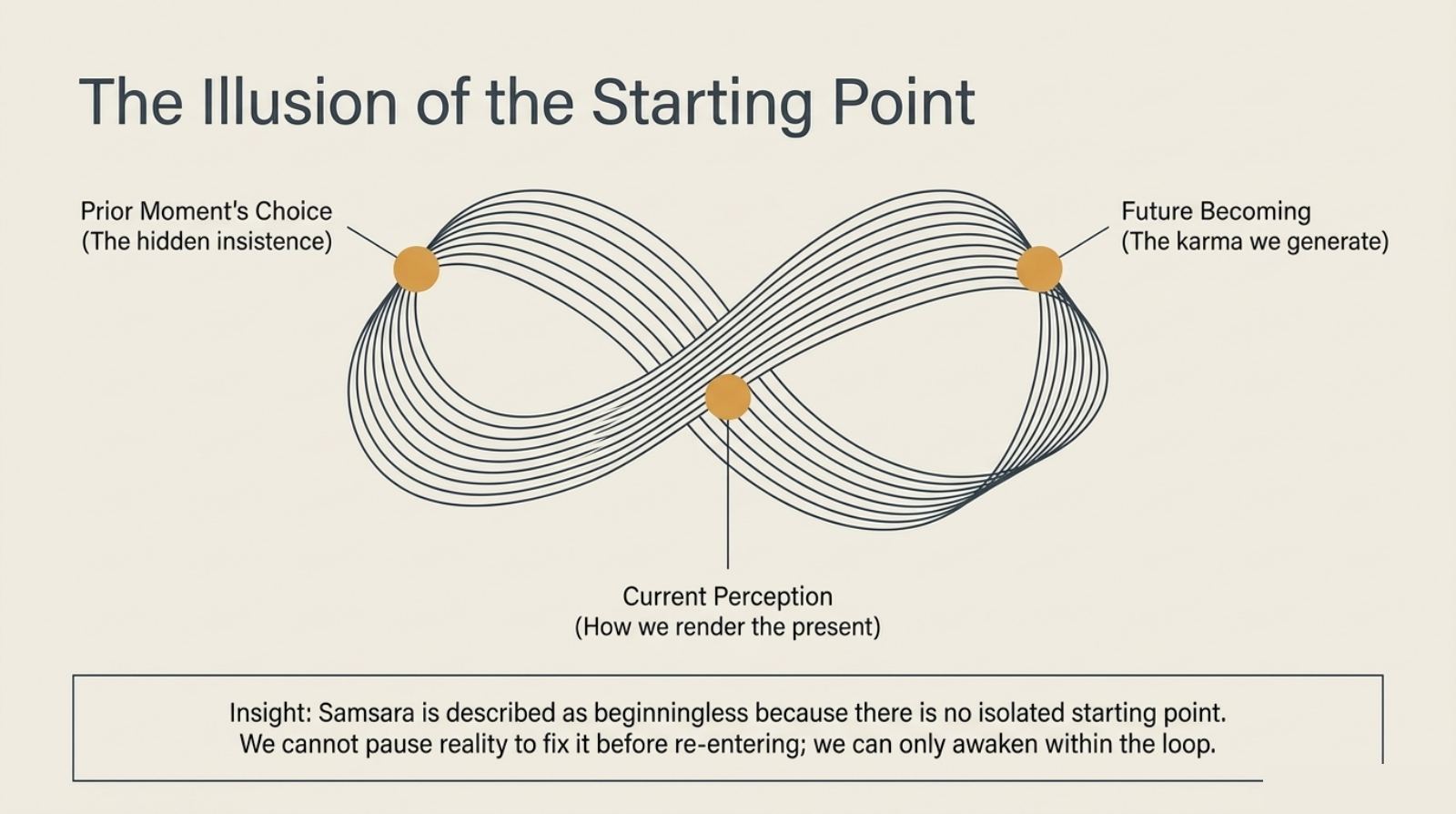
You are constantly choosing what to include, what to ignore, how to interpret. But these choices are not experienced as choices. This is conditioned participation, unrecognized as such.
 Tap to enlarge
The Moment of Exit
The whole teaching converges here. The practice is not stabilizing attention, cultivating states, or refining technique. The practice is recognizing the exact moment attention moves to leave.
This movement has a distinct feel: a subtle pull, a tightening toward preference, a reaching toward resolution. It may show up as "this shouldn't be happening," "let me adjust this," "this isn't it." But before language, it is felt as a shift in orientation away from totality. That is the exit.
 Tap to enlarge
Why This Is Difficult to See
Because the exit is not dramatic. It is constant, conditioned, socially reinforced. It is embedded in productivity, in self-improvement, even in spiritual practice. Much of what is called "practice" is refined exit behavior — optimizing the sit, pursuing calm, constructing ideal conditions. All of it reinforcing the same assumption: the problem is elsewhere.
 Tap to enlarge
Honesty as Functional, Not Moral
Working with this requires a specific kind of honesty. Not self-judgment, confession, or evaluation, but non-avoidance of what is already occurring — restlessness, distraction, resistance, "bad sits." Because:
If you treat these as obstacles, you repeat the exit. If you include them, you expose the mechanism.
This is what it means to be the problem — not as an identity you confess to, but as the participation you are already doing.
Collapse of Practice vs Life
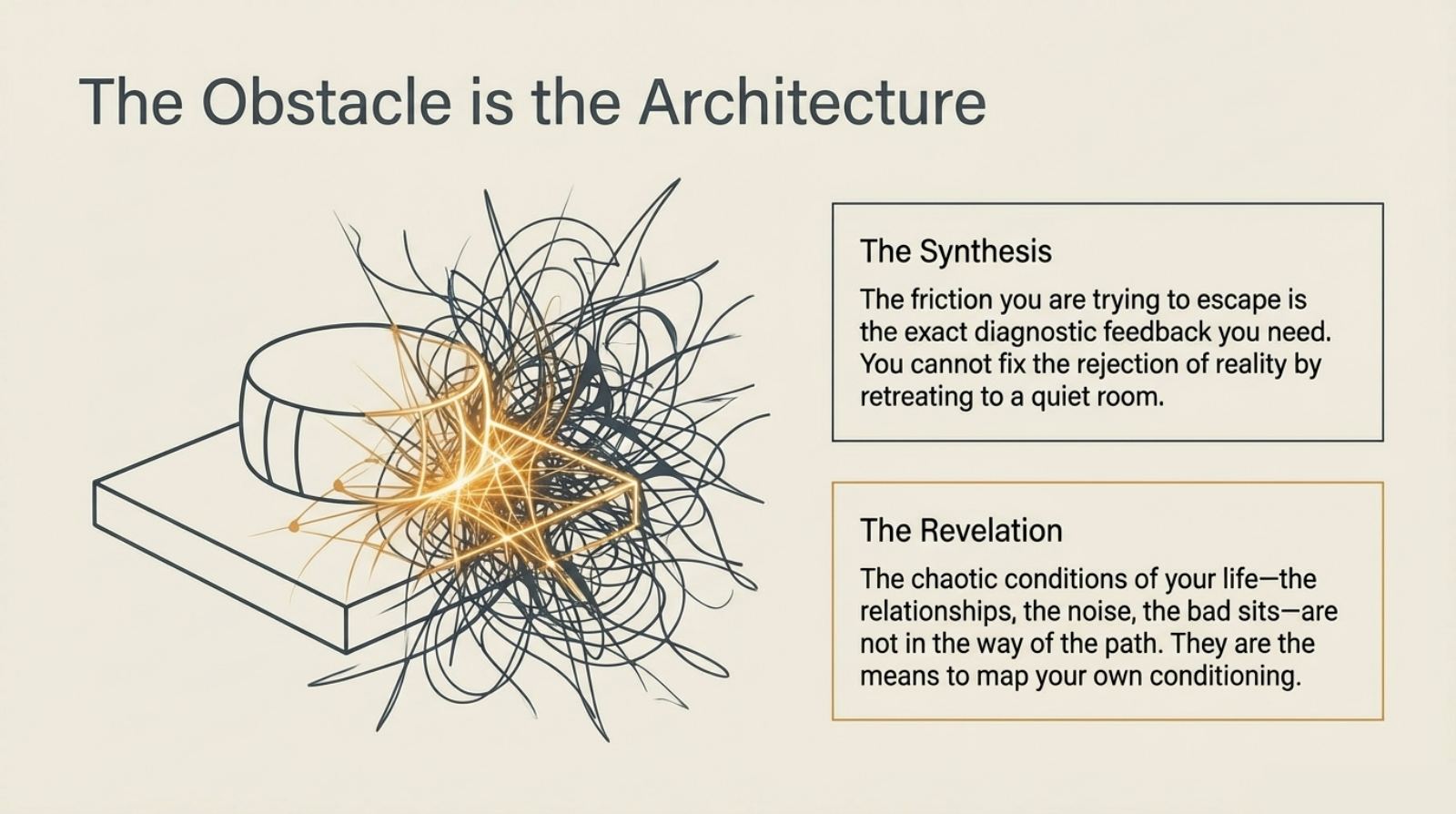
A structural error runs through most practice: practice means controlled, quiet conditions; life means interference and noise. This builds a fragile realization — a stability that depends on its environment. The teaching reverses it.
Life is the diagnostic field.
Relationships, unpredictability, and friction reveal hidden insistences, expose exit patterns, and return real-time feedback. Without them, the mechanism stays invisible.
 Tap to enlarge
The End of "Getting Somewhere"
At the deepest level, this dismantles the motivational structure of practice. It removes future orientation ("I'll get there"), technique dependency ("I need a better method"), and externalization ("the problem is elsewhere"), and replaces them with the immediacy of responsibility. Not as burden — as clarity. The mechanism is already active. The exit is already happening. The recognition is available now.
 Tap to enlarge
Final Compression
- Suffering is friction from rejecting what is.
- Ignorance is not seeing that rejection as a choice.
- Absorption is always present, but structured.
- Exit is the movement of attention away from totality.
- Practice is recognizing that movement in real time.
The final question is not instructional. It is diagnostic.
Can you see the moment you leave?
Clips

Exiting by Getting Lost in Experience
From Discussion 1, Room 1
Getting absorbed into what arises can itself be an exit — attention leaves contact by dissolving into experience rather than staying with it. From Discussion 1, Room 1.

What Is Unconditioned Contact?
From Discussion 1, Room 1
Contact without conditions — meeting experience before preference shapes it. What it means to touch the moment without requiring it to be different. From Discussion 1, Room 1.

Orienting to Pain as Signal
From Discussion 1, Room 2
Pain re-read as information rather than threat — feeling it directly instead of managing it. From Discussion 1, Room 2.