Seeing What You Cannot See

Transmission 4
Seeing What You Cannot See
The complete Lesson 4 teaching. Why you can't fully see your own patterns, even with more awareness — and how the blind spot functions.
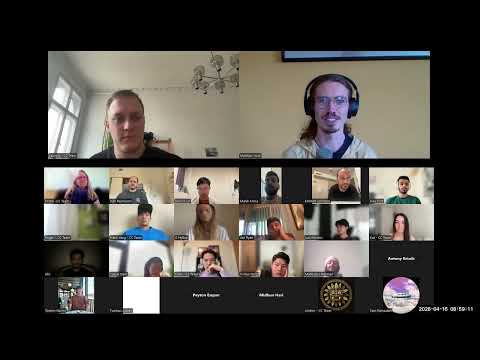
Discussion 4 - Room 1
Led by Laurenz
The complete Lesson 4 discussion room, unedited, led by Laurenz. Practitioners working the teaching in real time — questions, resistance, and live guidance.
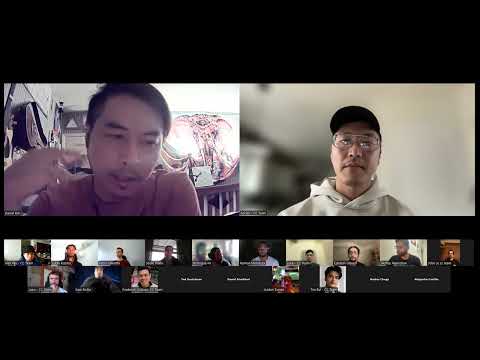
Discussion 4 - Room 2
Led by Adrian
The complete Lesson 4 discussion room, unedited, led by Adrian. Practitioners working the teaching in real time — questions, resistance, and live guidance.

Discussion 4 - Room 3
Led by Shreyash
The complete Lesson 4 discussion room, unedited, led by Shreyash. Practitioners working the teaching in real time — questions, resistance, and live guidance.
Videos
Do We Need to Understand to Be Intimate?
From Discussion 4, Room 1
Cuts through a hidden premise: that intimacy requires full self-understanding first. That demand for explanation is itself an exit — the deeper invitation is to be intimate with discomfort before it makes sense. From Discussion 4, Room 1.
Seeing vs. Recognizing
From Discussion 4, Room 1
Seeing notices the pattern; recognition closes the loop by including ownership, responsibility, and responsiveness. Seeing without ownership easily becomes another refined distance. From Discussion 4, Room 1.

"Awareness Will Take Care of It"
From Discussion 4, Room 1
Exposes a subtle bypass — treating awareness as separate from you can become a way of abandoning responsibility. If awareness is taking care of it, you must step in as that care. From Discussion 4, Room 1.

What Is Real Surrender?
From Discussion 4, Room 1
Real surrender isn't surrender to some object, concept, God-image, or idealized state — the moment surrender has a target, it's already structured and partial. From Discussion 4, Room 1.

Flawed Self Desiring Union with Perfect Reality
From Discussion 4, Room 1
A precise articulation of spiritual separation — "I am flawed, reality/God is perfect, and I must move toward it." That path structure depends on maintaining distance; even devotion can be organized around self-rejection. From Discussion 4, Room 1.
Solo Practice vs. Sangha Participation
From Discussion 4, Room 2
Participation changes the texture of practice. Speaking, being seen, and co-creating the field reveals blind spots that solo practice can preserve — sangha as diagnostic pressure. From Discussion 4, Room 2.
Aversion to the Ordinary
From Discussion 4, Room 2
Ordinariness becomes aversive when there's still a hidden demand for specialness, peak experience, or movement. The sit reveals the same structure running daily life. From Discussion 4, Room 2.
What Is Ordinary?
From Discussion 4, Room 2
"Ordinary" isn't an objective category but a meaning-label that shapes experience. Once named, it becomes a subtle conditioning structure that can flatten intimacy and richness. From Discussion 4, Room 2.

Close the Distance and Become the One Who Chooses
From Discussion 4, Room 2
Confronts a refined nondual bypass — hiding inside choicelessness to avoid determination. The medicine is direct: just choose. Closing that distance restores agency without collapsing into egoic contraction. From Discussion 4, Room 2.

Real-Time Feedback in Sangha
From Discussion 4, Room 2
Alone, you can only see what your current structure permits. In sangha, validation and invalidation both matter — community destabilizes self-enclosed certainty. From Discussion 4, Room 2.

Recognition, Vulnerability, Anger as a Pattern
From Discussion 4, Room 3
Anger shown not as a moral failure but as an automatic patterned response to destabilization and vulnerability. The pattern fires before conscious control — recognition begins where self-blame stops. From Discussion 4, Room 3.

Lust, Shame, Guilt, Resistance to Resistance
From Discussion 4, Room 3
A rich case study: lust appears, shame locks onto it, then resistance to the resistance extends the suffering. The real suffering is the layered insistence that it shouldn't be happening. From Discussion 4, Room 3.

Embodiment of the Problem
From Discussion 4, Room 3
You don't solve the problem by staying outside it — you solve it by studying it so completely that you are the problem. The division between problem and solver collapses. From Discussion 4, Room 3.
Seeing the Divine Feminine as an Exit to Lust
From Discussion 4, Room 3
A sophisticated spiritualization exposed: elevating women into "Divine Feminine" can temporarily reconfigure lust but can also become an escape from actual human and relational difficulty. Sacred framing can still be an exit if it splits sacred from ordinary. From Discussion 4, Room 3.

"I See You, Architect" — Totality of Feeling Equals Freedom
From Discussion 4, Room 3
Names the architect — the meaning-making mechanism itself. Freedom isn't found by selecting the right feelings, but by not stopping halfway through experience. Wherever you stop is where the exit hides. From Discussion 4, Room 3.
Cause and Effect, Concepts and Abstractions
From Discussion 4, Room 3
Cause and effect stop being simple linear explanation and become participatory. As rigid conceptual separations soften, choosing becomes more visible — the beginning of real freedom through ownership of becoming. From Discussion 4, Room 3.
Narrating Experience as an Exit Strategy
From Discussion 4, Room 3
Narration can masquerade as honesty while creating distance. Instead of being with the anger, confusion, or dreamlike state, the mind tells the story about it — the narration becomes the exit. From Discussion 4, Room 3.